7 Warning Signs Your Perth Roof Is Leaking
A roof leak rarely announces itself with a dramatic waterfall through the ceiling.
Most damage starts quietly with a small stain or a faint musty smell.
You might not notice anything is wrong until one day you are dealing with a costly repair that could have been prevented.
Perth homeowners face unique challenges thanks to our harsh summer sun, coastal humidity, and powerful winter storms rolling in off the Indian Ocean.
We have seen firsthand how the local climate accelerates wear and tear on roofing materials.
Knowing what to look for can save you thousands of dollars and a great deal of stress.
Here are seven warning signs that your roof may be leaking, along with practical advice on what to do about each one.
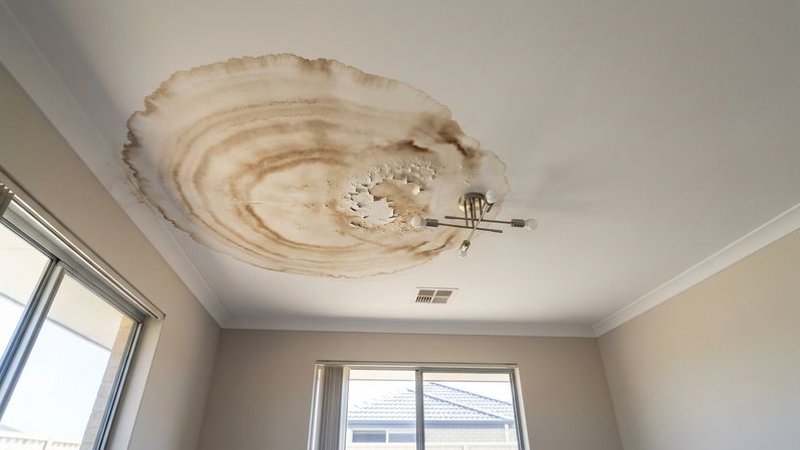
1. Water Stains on Ceilings or Walls
Brown or yellowish rings on your ceiling are one of the most obvious indicators.
These stains typically grow larger after each rain event.
In Perth, you might first notice them during the wet season between May and August when sustained rainfall tests every weak point on your roof.
We often find that “ghosting” or faint discoloration appears weeks before a defined ring forms.
The location of the stain does not always align perfectly with the leak source because water travels along beams before dripping.
What to do: Mark the edge of the stain with a pencil and date it.
If it grows after the next rain, you have an active leak that needs professional leak detection and repair.
This simple tracking method gives us valuable data when we arrive to inspect the issue.
2. Mould or Mildew Growth
Perth’s coastal humidity creates perfect conditions for mould once moisture enters your roof cavity.
This is particularly true in Northern coastal suburbs like Hillarys, Mindarie, and Burns Beach where salt air accelerates the process.
Look for dark patches on walls, around cornices, and inside wardrobes that back onto external walls.
Biological growth like this indicates that humidity levels in your ceiling space have been elevated for an extended period.
Why Mould is a Major Red Flag
Mould spores can begin to colonize damp materials within 24 to 48 hours.
We consider this an urgent issue because it impacts indoor air quality and family health.
What to do: Mould is a health hazard.
Ventilate the area immediately and have a roofer inspect the roof space to find the moisture source.
3. A Persistent Musty Smell
Sometimes you will smell a leak before you see it.
A damp, earthy odour that lingers even after airing out a room usually means moisture is trapped in insulation, timber framing, or the ceiling cavity.
We frequently trace these smells back to saturated insulation batts that have lost their thermal efficiency.
The Hidden Impact on Insulation
Wet insulation acts like a wet sponge sitting against your ceiling plaster.
It loses its R-value (thermal resistance), making your home hotter in summer and colder in winter while promoting rot in adjacent timbers.
What to do: Do not ignore this one.
Prolonged dampness weakens structural timber and can lead to expensive frame repairs.
Book a roof inspection sooner rather than later to save your insulation from total ruin.
4. Dripping Sounds or Visible Drips
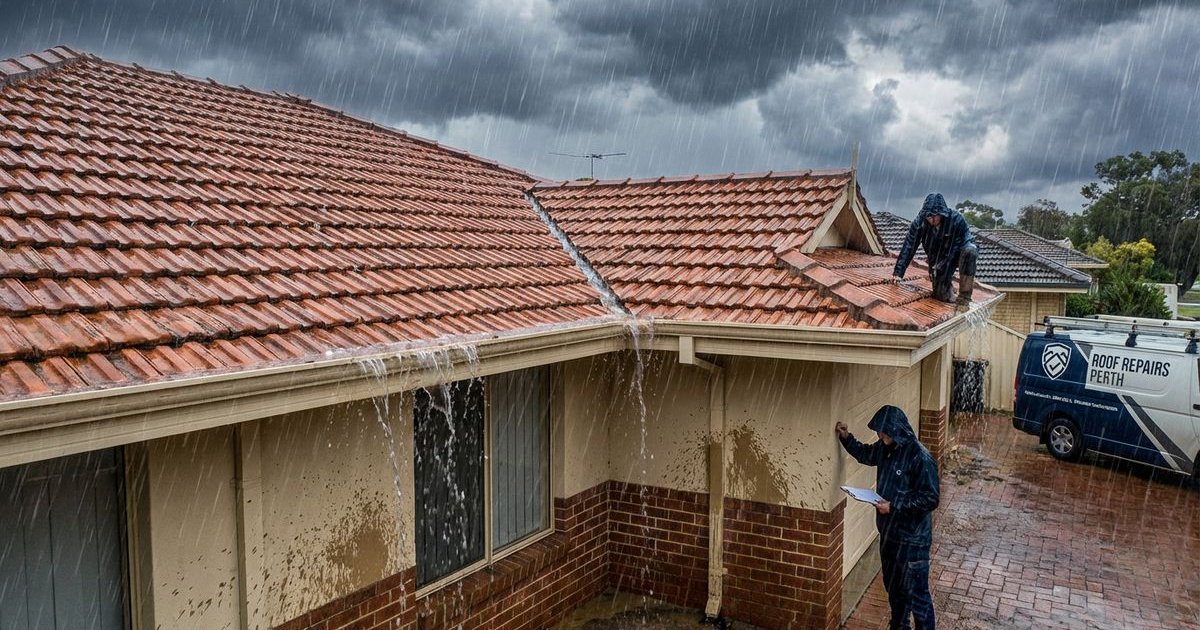
Hearing water dripping inside walls or seeing drops during or after rain is an urgent sign.
The water you can see is often only a fraction of what is spreading through your roof cavity.
We know that by the time a drip penetrates the ceiling, gallons of water may have already pooled above.
What to do: Place a bucket under the drip and move any valuables or electronics away from the area.
Call for an emergency roof repair to minimise further damage.
Poking a small hole in the center of the bulge can actually help drain the water controlledly and prevent the entire ceiling sheet from collapsing.
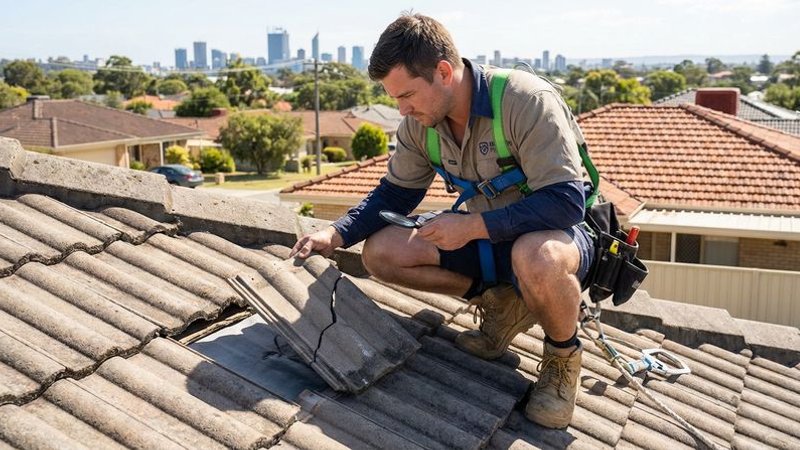
5. Cracked, Broken, or Missing Roof Tiles
Perth’s extreme temperature swings cause tiles to expand and contract.
Suburbs like Joondalup and Wanneroo often experience scorching 40-degree summer days followed by rapid cooling at night.
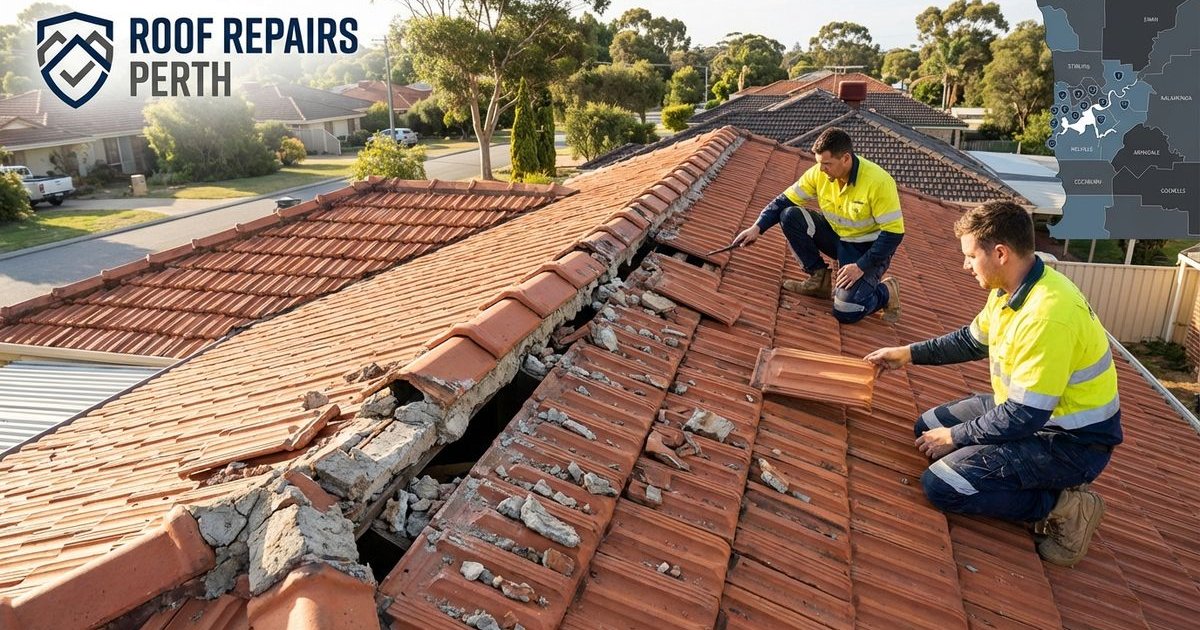
This thermal shock leads to hairline cracks that let water through.
We also see high winds during winter storms dislodging tiles entirely.
Common Tile Failures by Type
| Tile Type | Common Failure Point | Visual Sign |
|---|---|---|
| Terracotta | Fretting or delamination | Flaking layers or orange dust in gutters |
| Concrete | Ridge capping cracks | Mortar falling out or visible daylight under caps |
| Slate | Slippage | Tiles looking uneven or out of line |
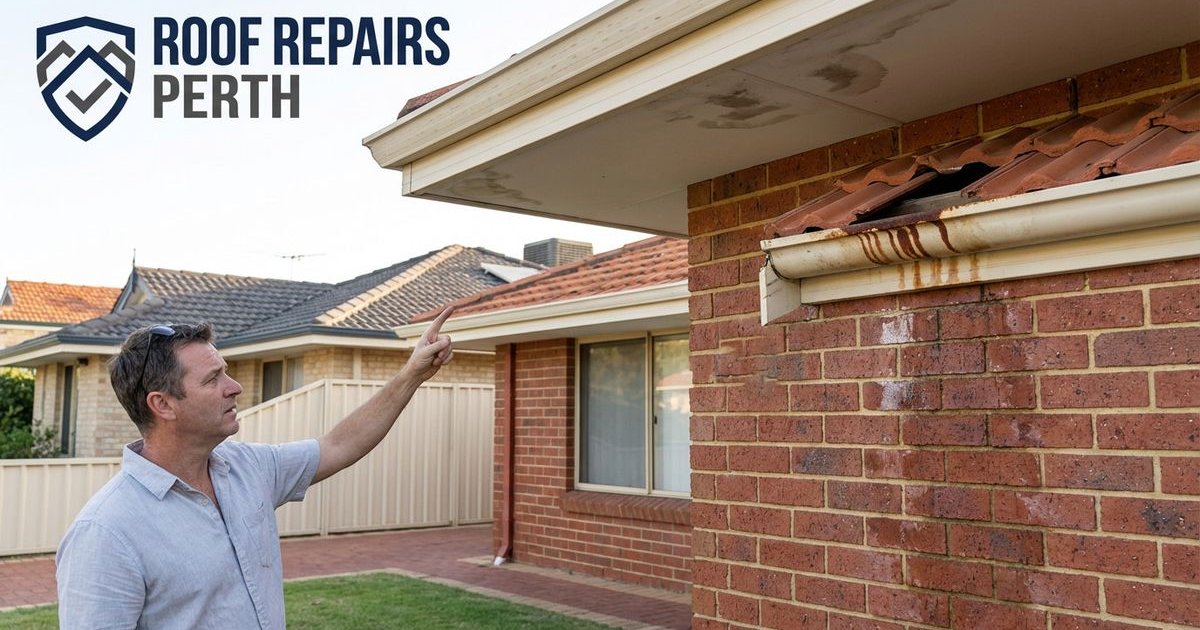
What to do: A visual check from ground level with binoculars can reveal obvious damage.
For a thorough assessment, have a licensed roofer walk the roof and check for cracked, slipped, or missing tiles.
Replacing a few tiles early is far cheaper than dealing with water damage to your ceiling and insulation.
6. Sagging Ceiling Plaster
If your ceiling is bowing or sagging, water is pooling above the plasterboard.
This is a serious structural concern because saturated plasterboard can collapse without warning.
We advise homeowners that a standard sheet of Gyprock becomes incredibly heavy when wet.
The adhesives and screws holding it in place are not designed to support that kind of water weight.
What to do: Stay clear of the sagging area and call a roofer immediately.
Do not attempt to puncture the bulge yourself unless you are prepared for a sudden release of water.
This situation requires immediate professional intervention to secure the ceiling and stop the ingress.
7. Overflowing or Damaged Gutters
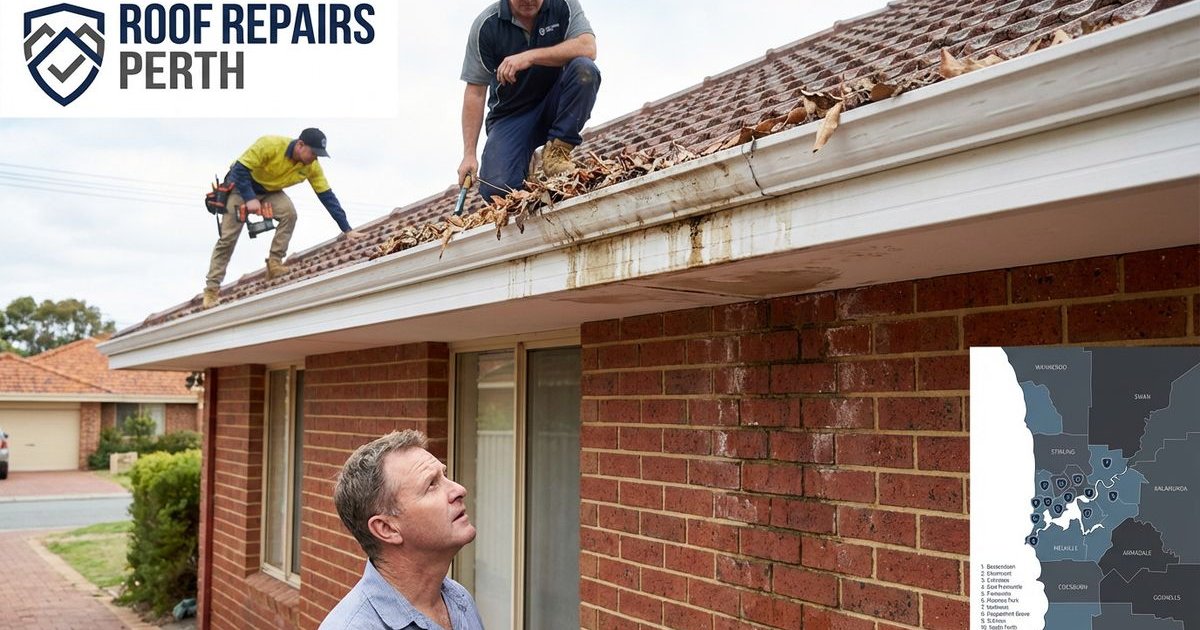
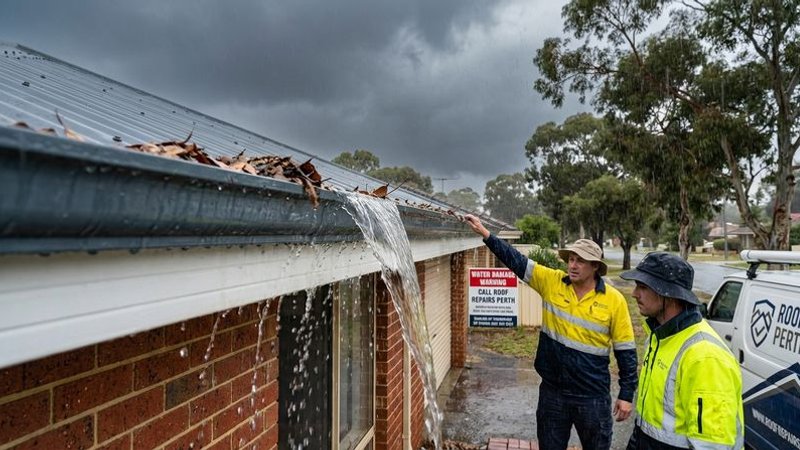
Gutters that overflow during moderate rain often allow water to back up under roof sheeting.
We see this issue frequently in established Northern suburbs like Carine and Duncraig where leaf litter blocks flow.
If the gutters pull away from the fascia or show visible rust, they are failing to direct water away from your home.
Internal box gutters are particularly notorious for causing leaks when they block up or rust through.
What to do: Clear any debris and inspect for rust holes, sagging sections, or joints that have separated.
If the gutters are beyond repair, consider a full gutter replacement with modern Colorbond materials.
Upgrading to a larger profile gutter can also help handle the intensity of modern Perth storm surges.
Why Acting Early Matters in Perth
Perth’s climate does not forgive procrastination when it comes to roof maintenance.
Our combination of UV exposure, salt-laden coastal air, and intense winter rainfall means that a small crack today can become a major leak within a single season.
We urge you to consider the financial difference between proactive maintenance and reactive repair.
The Cost of Waiting
The average cost of fixing a minor roof leak in Perth is a fraction of the cost of repairing water-damaged ceilings, insulation, and electrical wiring.
Insurance policies often contain exclusions for damage caused by “lack of maintenance” or “wear and tear.”
This means if a leak is due to old, unmaintained pointing or rusted gutters, your claim might be denied.
Early detection also helps you avoid potential mould remediation costs, which can run into thousands of dollars.
What to Do Next
If you have noticed any of these warning signs, here is a simple action plan.
We recommend taking these steps immediately to protect your property:
- Document the damage: Take clear photos and note the date you first spotted the issue.
- Contain active water entry: Use buckets, towels, and plastic sheeting to limit the spread.
- Avoid the temptation of a DIY fix: Temporary silicone patches often fail and make professional diagnosis harder.
- Book a professional roof inspection: A qualified roofer can assess the full extent of the damage.
Our team offers obligation-free roof inspections across Perth’s northern, southern, and eastern suburbs.
We will identify every issue, explain your options, and provide an honest quote.
If you have noticed any of the signs above, get in touch today before that small leak becomes a big problem.
Need Help with Your Roof?
Get a free inspection and quote from Perth's trusted roof repair specialists. No call-out fee.