Your Ridge Capping Is Crumbling — Here Is What Is Happening and What to Do
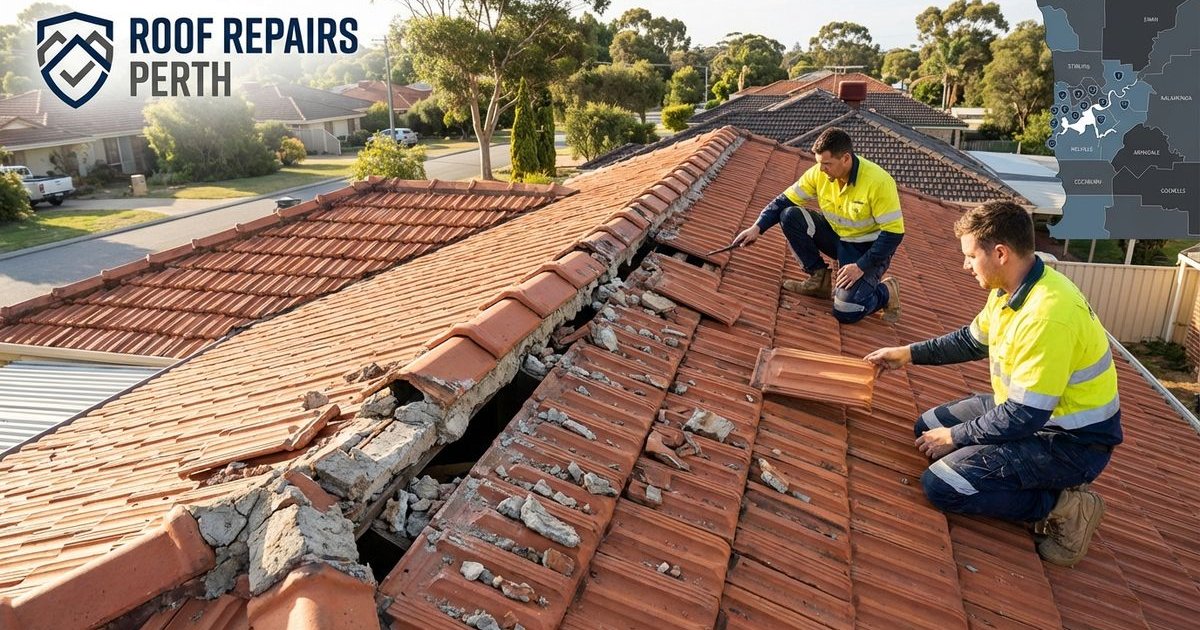
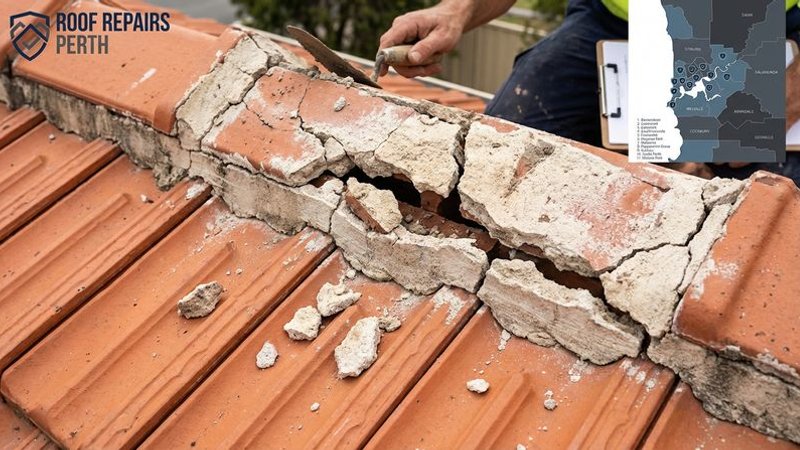
If you have found sandy grit piling up on your patio furniture or noticed chunks of grey cement in your gutters, your roof is trying to tell you something. We see this constantly across Perth’s northern suburbs. It is the classic sign that your ridge capping mortar is failing. While it might look like a minor cosmetic issue from the driveway, those small gaps are actually a direct entry point for water to get into your ceiling cavity during the next storm.
You need to know exactly why this is happening and how to fix it before the winter rains arrive.
What Is Ridge Capping?
Ridge capping refers to the V-shaped tiles that sit along the spine of your roof where two sloping sides meet. We secure these caps using a “bedding” of cement mortar, which is then sealed with a flexible pointing compound to make it watertight.
On a standard Perth tiled roof, this system performs two non-negotiable jobs:
- The Water Shield: It stops driving rain from being pushed up and under your top row of tiles.
- The Anchor: It physically holds the heavy concrete or terracotta tiles in place during high winds.
When the bond breaks, you lose both your waterproofing and your structural integrity.
The Role of Weep Holes
One detail many people miss is the “weep hole.” A properly installed ridge cap must have small drainage points every few metres to let trapped moisture escape. If your original builder blocked these up with messy mortar work—which was common in the building booms of the 90s—moisture builds up inside the bedding and rots it from the inside out.
Why Does Ridge Cap Mortar Crumble in Perth?
Our local climate is uniquely hostile to traditional cement mixes. We find that standard mortar simply cannot handle the specific environmental stresses of Western Australia without modern additives.
Extreme Thermal Shock
Perth summers are famous for their intensity, but the real damage comes from the rapid temperature swings. We regularly see days hit 40°C+ followed by a rapid cooling from the “Fremantle Doctor” afternoon breeze. This sudden shift causes the roof tiles to contract while the rigid mortar stays hot. Over time, this daily push-and-pull shears the bond between the tile and the cement.
The UV Index Factor
The sun here is relentless on building materials. Perth consistently records a UV Index of 12+ (Extreme) during December and January, which is significantly higher than many other Australian capitals. UV radiation attacks the chemical bonds in older, standard cement, turning hard mortar into a chalky, crumbly powder that washes away in the rain.
The “Fast Build” Legacy
Many homes in suburbs like Joondalup, Wanneroo, and Canning Vale were built during periods of rapid expansion. We often encounter roofs in these areas where the original mix ratio was “lean” (too much sand, not enough cement) to save money. Thirty years later, that weak mortar has reached the end of its lifespan and is disintegrating.
Signs Your Ridge Capping Needs Attention
You do not need a ladder to spot the early warning signs. We recommend grabbing a pair of binoculars and doing a quick ground-level inspection of these key areas.
The Gutter Sediment Test
Check the ground directly under your downpipes or look inside your gutters if you can safely reach them. If you see piles of sand that look like loose beach grit, that is your ridge capping washing away.
The “Rattle” Sound
Listen to your roof during a windy night. If you hear a clunking or rattling noise, it usually means a ridge cap has completely detached from the bedding and is bouncing against the tiles.
Visible Separation
Scan the ridge line against the sky. You are looking for:
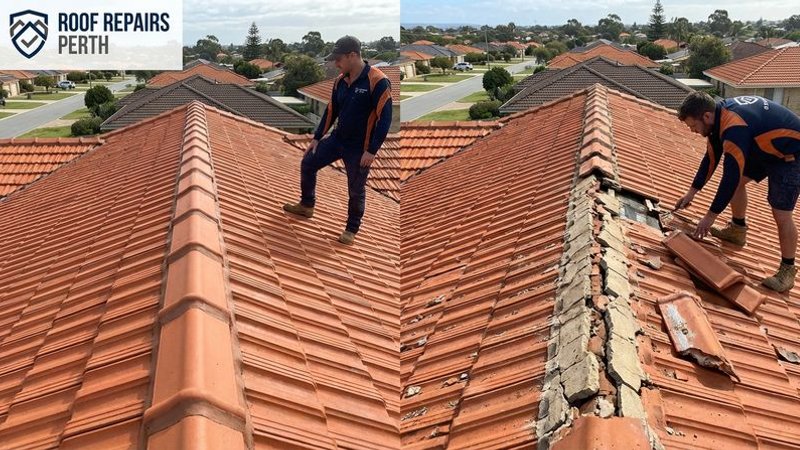
- Hairline Cracks: jagged lines running through the side of the mortar.
- Dark Gaps: spaces between the metal or clay cap and the roof tile.
- Displaced Caps: any cap that looks slightly crooked or slipped compared to its neighbours.
Internal Water Trails
Go into your roof space on a bright day and look for daylight shining through the ridge. If light can get in, water definitely can. You might also spot faint water stains running down the rafters near the centre of the house, which is a classic symptom of ridge failure.
Your Repair Options
There are two industry-standard ways to fix this, and the right choice depends entirely on the condition of your underlying bedding.
Option 1: Re-Pointing Only
This process involves applying a new layer of flexible compound over the existing bedding. We generally recommend this only if the original cement is still rock-hard and the caps are not loose.
The Process:
- We pressure clean the ridge to remove moss and loose debris.
- We apply a modern flexible pointing compound over the existing edge.
- We tool it off to create a neat, consistent finish.
Estimated Cost: $25 - $35 per linear metre.
Option 2: Full Re-Bedding and Re-Pointing
This is the complete restoration option. We lift the caps, remove every scrap of old mortar, and rebuild the ridge from scratch. This is the only way to guarantee the fix lasts if your caps are loose.
The Process:
- We remove all ridge caps and clean off the old mortar.
- We lay a fresh bedding mix (typically a 4:1 sand-to-cement ratio) using a bedding rail frame to ensure perfectly straight lines.
- We re-seat the caps and apply flexible pointing as the final seal.
Estimated Cost: $40 - $80 per linear metre.
For a deeper explanation of both processes, see our guide on re-bedding vs re-pointing.
Comparing the Methods
| Feature | Re-Pointing Only | Full Re-Bedding |
|---|---|---|
| Best For | Cosmetic cracks, stable caps | Loose caps, crumbling mortar |
| Longevity | 5-8 years | 15-20+ years |
| Structural Integrity | Low (Seals surface only) | High (Resets the structure) |
| Cost | Lower upfront | Higher value over time |
Why Flexible Pointing Is the Modern Solution
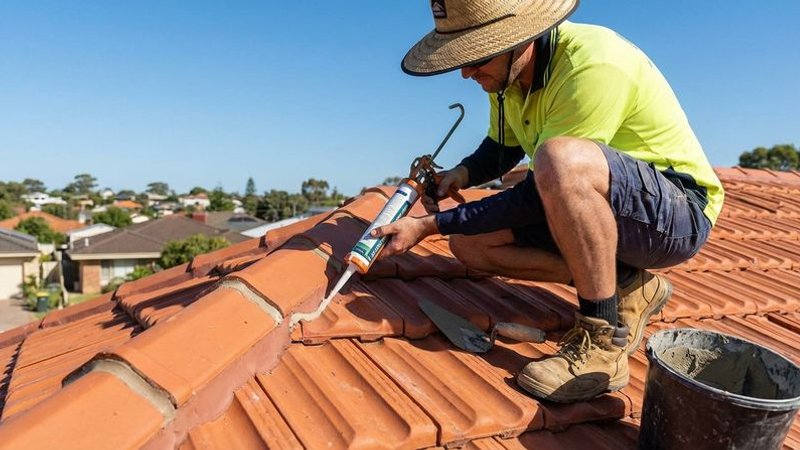
Old-school cement mortar is rigid, which is why it cracks. We now use advanced flexible pointing compounds like Starpoint or Dulux AcraTex for every repair. These acrylic-based materials are designed to stretch with your roof as it heats and cools.
The “C3” Wind Rating Advantage
Modern flexible pointing is not just about flexibility; it is about grip. A properly installed flexible pointing system is “mechanical fixing” compliant and meets the C3 wind rating. This means it has been tested to withstand cyclonic wind loads, keeping your roof intact during those severe winter storms that hit the Perth coast.
Superior UV Resistance
These compounds are formulated specifically for Australian conditions. They contain UV blockers that prevent the sun from breaking down the binder, ensuring the colour and seal last for over a decade.
For more details on the materials we use, check out our article on flexible pointing compound.
The Hidden Insurance Risk
Ignoring this maintenance doesn’t just risk leaks; it risks your coverage. We speak to homeowners every week who have had insurance claims denied because the assessor pointed to “lack of maintenance.”
Most Product Disclosure Statements (PDS) from major insurers like RAC or HBF strictly exclude damage caused by wear and tear. If a storm rips off a ridge cap that was already crumbling, they will likely classify it as a maintenance issue rather than storm damage. Keeping your ridge capping in top condition is your best defence against a rejected claim.
Take Action Now
Leaving crumbling ridge capping is a gamble with Perth’s weather. Our team specialises in ridge capping repairs across the Northern Suburbs, from Ellenbrook to Joondalup. We use only premium, C3-rated compounds to ensure your roof is secure for years to come.
Contact us today to book your free ridge capping inspection and get ahead of the next storm.
Need Help with Your Roof?
Get a free inspection and quote from Perth's trusted roof repair specialists. No call-out fee.